Your 'Before' Wasn't a Problem to Solve — It Was a Life Being Lived
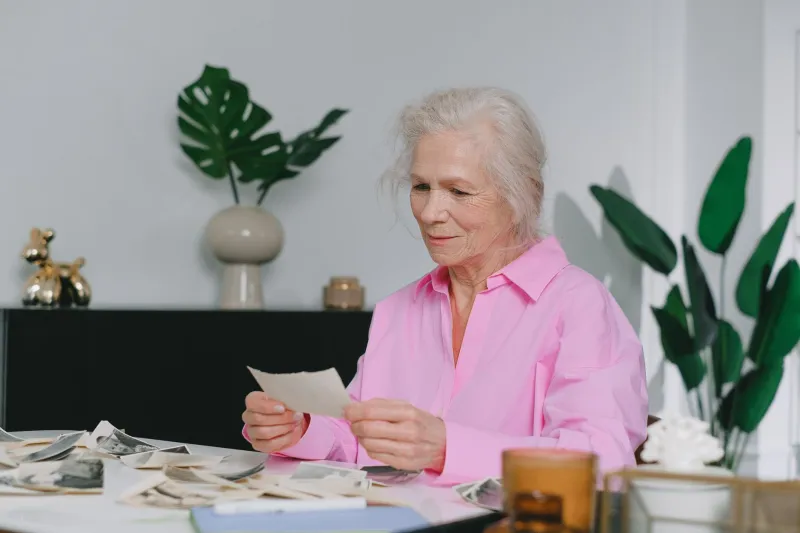
Scroll through Instagram on any given Monday morning and you'll find them. Two photos, side by side. One dim, one bright. One slouched, one standing tall. A caption that reads something like "I finally did it. I'm never going back." The before-and-after. The wellness world's favorite story format.
It looks like inspiration. It's packaged as motivation. But underneath all that carefully curated lighting and triumphant language, there's a framework doing a lot of quiet damage — and it's worth calling out.
The Story Always Has a Villain
Here's the thing about transformation culture: it needs a bad guy. And in every before-and-after narrative, that bad guy is the same person — the earlier version of you.
The "before" photo is never just a photo. It's a symbol. It signals struggle, failure, stagnation. The person in that image is coded as someone who hadn't figured it out yet, someone who needed to be fixed. The entire emotional arc of the story depends on that version of you being a problem worth solving.
And American fitness and diet marketing has gotten very, very good at selling that story. Weight loss programs, supplement brands, workout apps — they all traffic in the same basic currency: your dissatisfaction with where you've been. The more you can be convinced that your past body was a crisis, the more motivated you'll be to purchase the solution.
But here's what that framework never accounts for: that person in the "before" photo was living a real life. They were showing up for people they love. They were doing hard things. They were, in all the ways that actually matter, a complete human being — not a rough draft.
What That Framing Does to Your Brain
When we accept the idea that our past selves were problems to be solved, we're not just adopting a narrative. We're internalizing a relationship with our own history that is fundamentally rooted in shame.
Shame, as researchers like Dr. Brené Brown have spent careers documenting, doesn't actually motivate lasting change. It creates cycles. You feel bad about the "before," you chase the "after," and then — because bodies are not static, because life is not a controlled experiment, because weight fluctuates and circumstances shift — the "after" doesn't hold. And suddenly you're back in a "before" again, carrying even more evidence that you are, at your core, someone who keeps failing.
It's an exhausting loop. And it's one that transformation culture is specifically designed to keep you in, because a person who has genuinely made peace with themselves is not a great customer.
The psychological cost of treating your past body as a villain isn't just abstract. It shows up in how you talk to yourself in the mirror. It shows up in whether you let yourself be photographed at family gatherings. It shows up in the mental energy you spend cataloging every way your body has changed — and deciding which changes count as wins and which ones count as backsliding.
The Narrative Nobody's Selling You
So what's the alternative? What does it look like to tell your story without a villain?
It starts with refusing the premise that your body at any particular moment in time was a verdict on your worth. Your body five years ago, fifty pounds ago, one size ago — that body was carrying you through whatever that chapter of your life required. It deserved care then. It deserves care now. Neither version is the "real" you. Both of them are.
Body Love Conference exists, in part, because we believe that your whole timeline deserves celebration. Not just the chapters that look good in a side-by-side comparison. Not just the periods when you felt most aligned with whatever the culture was telling you a "healthy" body looked like. All of it. The before, the after, the messy middle, and every version of you that's still in progress.
That's not a small reframe. It's actually a radical one in a culture that profits from your self-rejection.
What a Truer Story Looks Like
Imagine describing your relationship with your body not as a redemption arc, but as an ongoing conversation. Some years that conversation has been gentler. Some years it's been brutal. Some years you've had access to resources — time, money, community, mental bandwidth — that made self-care easier. Some years you haven't. None of that makes you a before. None of that makes you an after. It makes you a person moving through a life.
When we gather at body-positive events and conferences, one of the things that happens organically — and it's kind of beautiful to witness — is that people start telling their stories differently. They stop framing their histories as problems they've overcome or haven't yet overcome. They start talking about themselves with a kind of continuity and compassion that transformation culture never allows for.
You hear things like: "I spent a long time at war with my body, and I'm learning to call a truce." Or: "I don't need my story to have a triumphant ending to know that I'm worth showing up for right now."
That's not giving up. That's actually the hardest, most courageous work there is.
Your Timeline Isn't a Problem to Solve
The next time you see a before-and-after photo — and you will, probably today — try noticing the story it's asking you to accept. Notice who it's casting as the villain. Notice what it's implying about the person on the left side of that image.
And then ask yourself: do I actually believe that? Do I believe that a human body, at any size or shape or stage, is a problem that needs solving before the person inside it gets to be celebrated?
We don't. Not even a little.
Your before photo, if you have one, shows someone who was alive and present and doing the best they could with what they had. Your current photo shows the same thing. Whatever comes next will show the same thing.
There is no ending to this story that looks like a triumphant "after." There's just you — continuing, evolving, and deserving of your own warmth at every single step along the way.
That's the story we want to tell here. And we think it's a much better one.