Turn It Up: How the Right Song at the Right Moment Is Quietly Rewriting the Rules of Movement
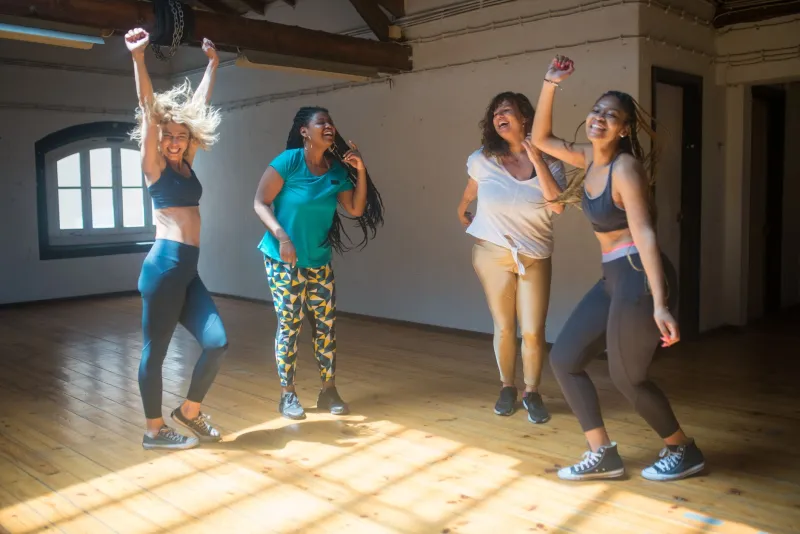
There's a moment that happens in a really good fitness class — not when you hit a personal record or finally nail a move you've been struggling with, but when a song drops and something in your chest just opens up. You stop thinking about your thighs or your breath or whether the person next to you is working harder. You just move.
For a lot of us, that moment has been rare. Because for years, mainstream workout culture has handed us playlists built around a very specific emotional pitch: urgency, punishment, relentless self-improvement. Songs that bark at you to push through, burn more, be more. Lyrics that casually reference "body goals" and "earning" your rest. It's baked in so deep that most people don't even notice it anymore.
But a growing community of instructors, artists, and wellness event organizers is noticing — and doing something about it.
The Hidden Curriculum of a Workout Playlist
Music has always been emotional infrastructure. It sets the tone before a single word is spoken. In a fitness context, the songs playing in the background aren't just filling silence — they're communicating something about what this space values, who it's for, and what "success" looks like here.
Research on music and exercise has long confirmed that tempo, rhythm, and lyrical content influence effort, mood, and perceived exertion. But body-positive educators are taking that one step further: if music shapes how we feel during movement, then the lyrics and cultural associations embedded in those songs are quietly shaping how we feel about our bodies during movement.
"I used to teach to the same playlists everyone else was using," says Maya Okafor, a Chicago-based dance fitness instructor who now runs community movement classes specifically for people who've had complicated relationships with exercise. "And I started noticing that certain songs would shift the energy in the room in ways I didn't want. People would get smaller. They'd stop making eye contact with themselves in the mirror. The music was doing something to them that I wasn't intending."
Maya started rebuilding her playlists from scratch — pulling in Lizzo, Beyoncé's Renaissance era, early 2000s R&B, Afrobeats, cumbia, classic funk. Songs where the body is celebrated in its fullness. Songs where joy, not discipline, is the point.
"The difference was immediate," she says. "People laughed more. They stayed longer. They came back."
What Body-Positive Playlists Actually Sound Like
There's no single template for a body-positive playlist — and that's kind of the whole point. The movement is less about a specific genre and more about an intentional curation philosophy: choose music that celebrates rather than critiques, that invites rather than commands, that reflects the actual diversity of the people in the room.
Instructors across the country are sharing their curatorial approaches in online communities, at wellness conferences, and through platforms like Spotify, where dedicated playlists with names like Move for Joy, Fat Positive Jams, and Curves & Bass have amassed thousands of followers.
Some common threads:
- Lyrics that celebrate the body as it is. Songs like Lizzo's "Juice," Megan Thee Stallion's "Body," and Janelle Monáe's "PYNK" have become staples not just because they're fun to move to, but because they say something affirming out loud.
- Genre diversity that reflects community diversity. Body-positive fitness spaces tend to skew more inclusive in their musical range — pulling from reggaeton, gospel, hip-hop, country, and indie pop rather than defaulting to the same Euro-electronic sounds that dominate commercial gym culture.
- Absence of diet-culture dog whistles. This means actively avoiding songs that reference weight loss, "getting lean," or working off food — even when those references are buried in otherwise upbeat tracks.
"It takes more work," admits Jordan Reyes, a Texas-based yoga teacher who curates playlists for body-positive wellness retreats. "You have to actually listen to the lyrics, not just the vibe. But once you start hearing it, you can't unhear it. So many popular workout songs are basically just diet culture with a good beat."
Sound as Collective Healing
At body-positive conferences and community events, the music choices often feel deliberate in a way that's almost ceremonial. There's something happening when a room full of people — in all their different bodies, at all their different places in their self-acceptance journeys — hears a song that says you are enough, exactly as you are and moves together.
Ayanna Brooks, who organizes movement-centered community events in Atlanta, describes the experience as something close to group therapy. "Music bypasses the brain's defenses," she says. "You can tell someone they're beautiful and they'll deflect it. But put on the right song and their body just believes it for a minute. That's powerful. That's healing."
This is the insight that's driving the body-positive music movement beyond just individual fitness classes and into larger cultural spaces — wellness festivals, online workout communities, corporate wellness programs that are starting to take inclusion seriously. The argument isn't just that better music makes for a better workout. It's that music is a form of messaging, and the messages we absorb while we're physically vulnerable — sweating, breathing hard, inhabiting our bodies fully — go deeper than the ones we receive sitting still.
Building Your Own Soundtrack
You don't need to be a fitness instructor to start thinking intentionally about the music in your movement practice. Whether you're taking a solo walk, following a YouTube workout, or dancing around your kitchen, the songs you choose are part of the environment you're creating for yourself.
A few starting points:
- Audit your current playlist. Listen to the actual lyrics of your go-to workout songs. How do they make you feel about your body specifically — not just energized, but about your body?
- Seek out body-positive artists. Beyond the obvious Lizzo effect, artists like Rina Sawayama, Doja Cat, Mary Lambert, and many independent musicians are making music that centers self-acceptance and body joy.
- Follow the instructors doing this work. Many body-positive fitness teachers share their playlists publicly. Finding one whose musical sensibility resonates with yours can be a shortcut to a whole new listening world.
- Let yourself be moved by music you love, not music you think you "should" exercise to. If you hate EDM but it's on every workout playlist you find, give yourself permission to move to something else. Joy is the whole point.
The Revolution Will Be Danceable
What Maya, Jordan, Ayanna, and hundreds of instructors like them are building isn't just a collection of feel-good playlists. It's a counter-culture — a deliberate pushback against decades of fitness messaging that has used music as just another tool to remind us that our bodies are projects to be completed.
The body-positive music movement says something different. It says that movement is a celebration, not a punishment. That the goal isn't to change your body — it's to inhabit it. And that the right song, at the right moment, can make you feel something true: that you are already, exactly, enough.
Turn it up.