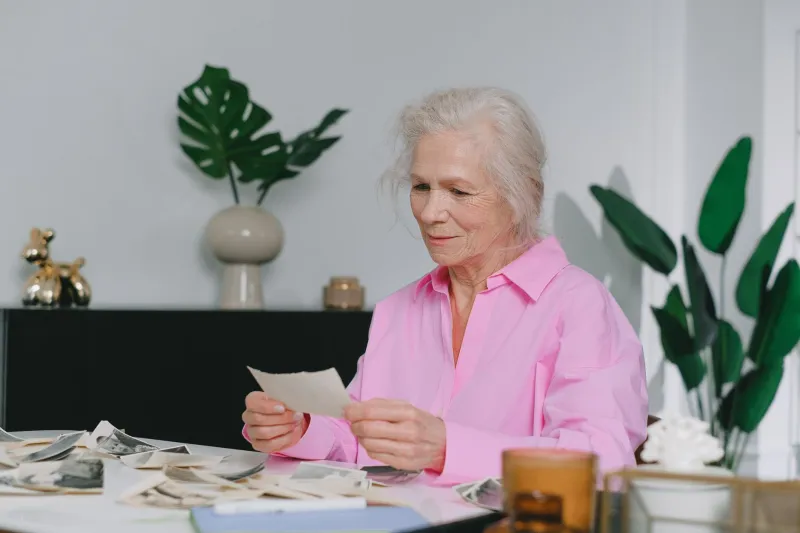
The Dress in the Back of the Closet Isn't a Deadline — It's a Diary
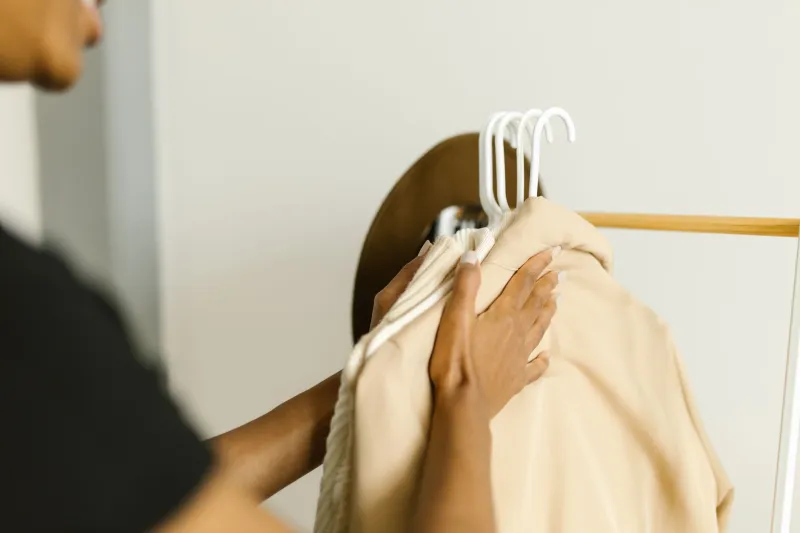
Somewhere in your closet — maybe shoved to the very back, maybe in a bin under the bed, maybe folded carefully in a drawer you only open when you're feeling brave — there's a piece of clothing that carries weight. Not physical weight. The other kind.
Maybe it's the jeans from a decade ago that you've been holding onto because someday. Maybe it's the sweater you wore so much one year that it stretched into a softer, looser version of itself, and you kept it anyway because it felt like home. Maybe it's a dress that fit a body you had before something changed — a pregnancy, an illness, a medication, a season of grief, just the ordinary passage of time.
Whatever it is, I'd be willing to bet you have complicated feelings about it. And I'd also be willing to bet those feelings have been shaped by a story you didn't write yourself.
The Mythology of the 'Someday' Clothes
Diet culture is nothing if not creative with its tools. One of its quietest and most effective ones is the aspirational garment — the item you keep not because it fits, but because it represents a body you've been taught to want back. The message is built right into the ritual of keeping it: you're not done yet. This is waiting for you. Don't forget what you're working toward.
And so the dress hangs there. A silent measuring stick. A soft accusation.
We've been conditioned to read clothes from our past as evidence. Too small means you've let yourself go. Stretched out means you've been careless. The pieces that no longer fit — in either direction — become a kind of archive of our alleged failures, a physical record of all the ways our bodies have refused to stay the same.
But here's what that framing completely misses: your body should change. It's alive. It's responding to everything you've been through — every hard year, every joy, every medication, every meal, every season of your life that asked something different of you. A body that never changed would be a body that never lived.
What Your Clothes Are Actually Keeping
Let's try a different story about the stuff in the back of your closet.
That worn-out hoodie from your early twenties? It was there for some of the most formative experiences of your life. It absorbed late nights and hard conversations and road trips and the specific comfort of figuring out who you were. It's not a reminder that your body was smaller then. It's a relic of a time that mattered.
The jeans you wore the year everything fell apart — and somehow you held it together anyway? Those aren't proof that you were better then. They're proof that you survived something. That your body carried you through.
The dress you bought for a future version of yourself that never quite arrived? That's not a failure. That's evidence of hope, of wanting, of the very human tendency to imagine yourself forward into something that feels good. You were dreaming. That's not pathetic. That's beautiful.
Clothes are archives. They hold the texture of our lives in a way that photos sometimes can't. When we reduce them to aspirational props or evidence of decline, we lose the richer, truer story they're actually telling.
On Keeping Them, Donating Them, and Everything In Between
Here's something the minimalism movement and the body-positive movement occasionally disagree on: what to do with clothes that don't fit.
The minimalist case is clean — if it doesn't serve you now, let it go. Create space. Stop holding onto the past. And there's real wisdom in that, especially when keeping something is actively hurting you. If every time you open your closet you see that dress and feel shame, that dress is not serving you. It's taxing you. And you are allowed to donate it without ceremony or guilt.
But the body-positive case is also worth hearing: not everything that doesn't fit your body right now is something you have to release. Some things are worth keeping because they meant something. Because they're part of your story. Because someday you might want to hold them and remember.
The question isn't does this fit? The question is what does keeping this do to me? If the answer is it makes me feel like I'm failing, let it go. If the answer is it makes me feel connected to a part of my life I don't want to forget, keep it with full permission, no apology required.
You don't owe your closet a single narrative about who you should be.
Ritualizing the Relationship With Your Wardrobe
One practice that's come up in body-positive communities is treating a closet cleanout less like a productivity task and more like an intentional ritual — something closer to going through old letters than KonMari-ing your kitchen.
Try holding a piece before you decide anything. Not to see if it sparks joy in the abstract, but to ask: what do I actually feel when I hold this? Grief? Warmth? Pride? Relief? Dread? Those feelings are information. They'll tell you more than any rule about whether something is worth keeping.
If you find pieces you've been saving for a future body, consider whether you'd actually wear them if that body arrived — or whether you're holding onto the idea of them more than the reality. Sometimes what we're really keeping is a permission slip we've been waiting to earn. And that permission? You can just give it to yourself. Now. In the body you have today.
Your Full Timeline Belongs to You
At Body Love Conference, we talk a lot about celebrating every body — but that includes celebrating every version of your body you've ever inhabited. The one that wore those jeans. The one that needed the softer sweater. The one you're living in right now.
Your wardrobe doesn't need to be edited down to a single, coherent story about who you are. It can hold contradictions. It can hold the past and the present and the hopeful maybe-someday all at once. It can be a little messy, a little sentimental, a little complicated.
Just like you. Just like all of us.
The dress in the back of the closet isn't a deadline you're failing to meet. It's a page in a diary you've been writing your whole life. And you get to decide what it means.