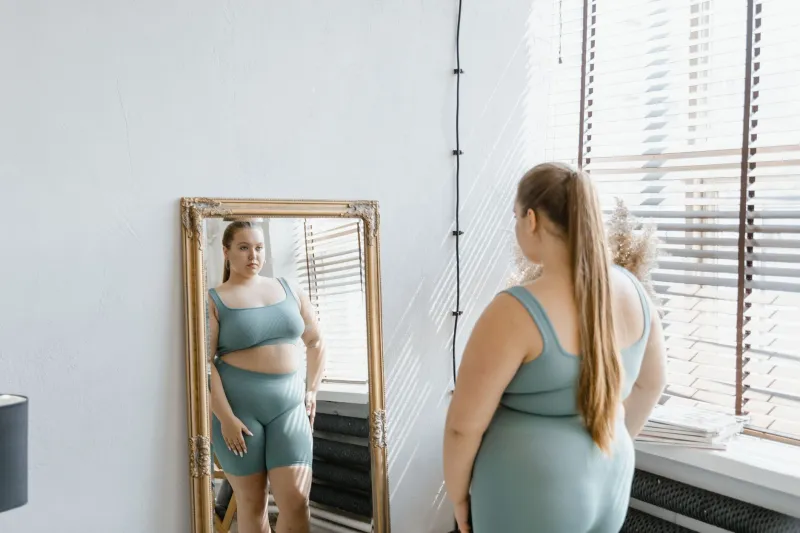
Your Past Body Wasn't a Better Body — It Was Just a Different One
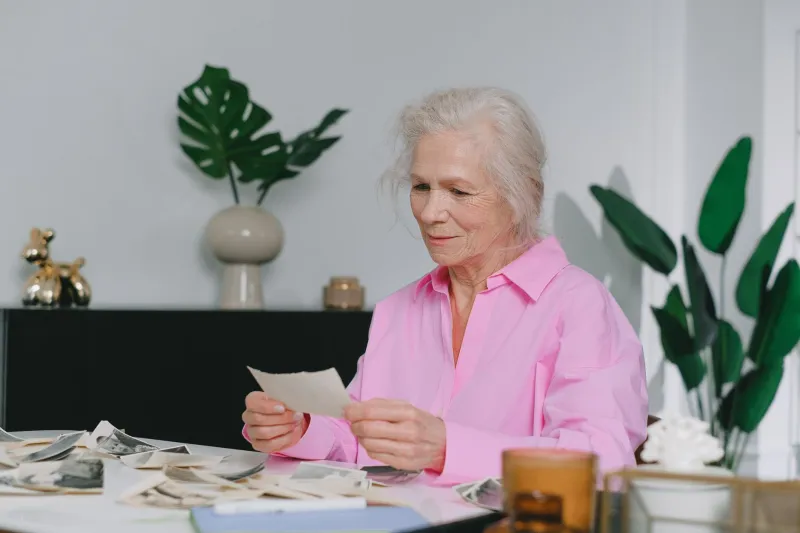
Somewhere in your phone, there's probably a photo. Maybe it's from a vacation, a wedding, a random Tuesday that got documented for no particular reason. And when you stumble across it, something shifts — a quiet ache, a flicker of I used to look like that, followed almost immediately by a comparison that doesn't go well for present-day you.
This is the before-photo trap. And it's one of the sneakiest, most persistent ways we keep ourselves from actually living in our bodies right now.
The Cultural Script We've All Been Handed
Before-and-after transformations are basically their own genre at this point. They show up in weight loss ads, fitness app testimonials, Instagram grids, and daytime TV segments. The format is so familiar it's practically a reflex: here's the old body (dim lighting, sad expression, unflattering angle), and here's the new body (bright, triumphant, worthy of celebration).
What that narrative teaches us — over and over, from childhood on — is that bodies have a hierarchy. Some versions are aspirational. Others are cautionary. And the before photo? It's almost always cast as the villain of the story.
But here's what that script conveniently leaves out: the person in both photos is the same person. With the same history, the same laugh, the same capacity for joy. The transformation narrative flattens all of that into a single metric — size — and asks us to rank our own lives accordingly.
When Your Past Self Becomes Either a Ghost or a Goal
There are two ways the before-photo mindset tends to play out, and neither one is kind.
The first is nostalgia-as-punishment. This is when you look back at a smaller or younger version of your body and treat it like a lost golden era — something you had and squandered, a peak you'll spend the rest of your life trying to return to. People in the body-positive community talk about this constantly: spending years mourning a body they had at 22, or after a breakup, or during a period of illness, without ever stopping to ask whether they were actually happy in that body at the time.
The second is the cautionary tale version — using older photos of a larger or different body as a reminder of what you're trying to avoid, a visual warning system you carry around in your own memory. This one is especially insidious because it disguises itself as motivation. But what it's actually doing is teaching you to feel shame about a version of yourself that existed, that was you, that deserved care and dignity just as much as any other version.
Both patterns do the same thing: they pull you out of the present tense and into a constant, exhausting negotiation between past and future selves, with your actual current body caught in the middle.
What the Research Actually Says
Body-image researchers have been documenting the harm of temporal body comparison for years. Studies consistently show that comparing your current body to a past version — especially when that comparison is framed negatively — is linked to higher rates of body dissatisfaction, disordered eating behaviors, and lower overall psychological wellbeing.
One concept that keeps coming up in this research is the idea of the "ideal body" being a moving target. When people are focused on returning to or maintaining a past body size, they're essentially chasing something that was never static to begin with. Bodies change. They're supposed to. Hormones shift, circumstances change, we age, we heal, we go through things. A body at 35 isn't failing to be a body at 25 — it's just being a body at 35.
Dr. Tracy Tylka, a psychologist whose work focuses on body image and intuitive eating, has written extensively about how positive body image isn't about loving how your body looks — it's about appreciating what your body does and treating it as worthy of care regardless of appearance. That framework doesn't have a lot of room for before-and-after comparisons, because it's not operating on a timeline of better and worse. It's just operating in the present.
The Body-Positive Reframe: Continuity Over Comparison
At Body Love Conference events, one of the themes that comes up again and again — in workshops, in community conversations, in the quiet moments between sessions — is the idea of your body as a continuous presence rather than a series of checkpoints.
Your body right now isn't a before photo waiting to happen. It's also not a before photo that already happened. It's just your body, doing its thing, carrying you through your actual life.
That reframe sounds simple, but living it is a practice. Here are a few ways people in the body-positive community have found to start:
Rewrite the caption. When you look at an old photo, try narrating it differently. Instead of I was so much smaller then, try I was 28 and going through a lot or That was the summer I learned to make sourdough. Ground the image in context, not comparison.
Get curious instead of critical. If you notice yourself comparing your current body to a past one, try treating that as information rather than a verdict. What's underneath the comparison? Grief? Anxiety? A stressful week? The feeling itself is worth examining — not the body it's pointed at.
Resist the highlight reel. Before-and-after culture thrives on selective memory. We tend to remember the version of our past body that looked a certain way in a specific photo, not the chronic pain, the restrictive eating, the exhaustion, or the things we missed out on because we were too busy managing our appearance. The full picture is almost always more complicated than the image.
Practice present-tense language. This one is small but surprisingly powerful. Try describing your body in terms of what it's doing right now — my legs carried me through a long day, my hands made something I'm proud of — rather than how it compares to a former version.
You Were Never a Before
Here's the thing about before-and-after narratives: they only make sense if you accept the premise that some bodies are the point and others are just the setup. Body Love Conference exists, in part, to challenge exactly that premise.
Every body at every stage — every size, every age, every chapter — is the actual story. Not the prologue. Not the cautionary tale. Not the thing you're trying to get back to or escape from.
You were never a before photo. You were just a person, living your life, in a body that was doing its best. And that's exactly what you are right now, too.
The comparison can stop here. The present tense is available. And it turns out, that's where all the real stuff actually lives.