Who Actually Gets In? The Uncomfortable Truth About Exclusion in Wellness Spaces

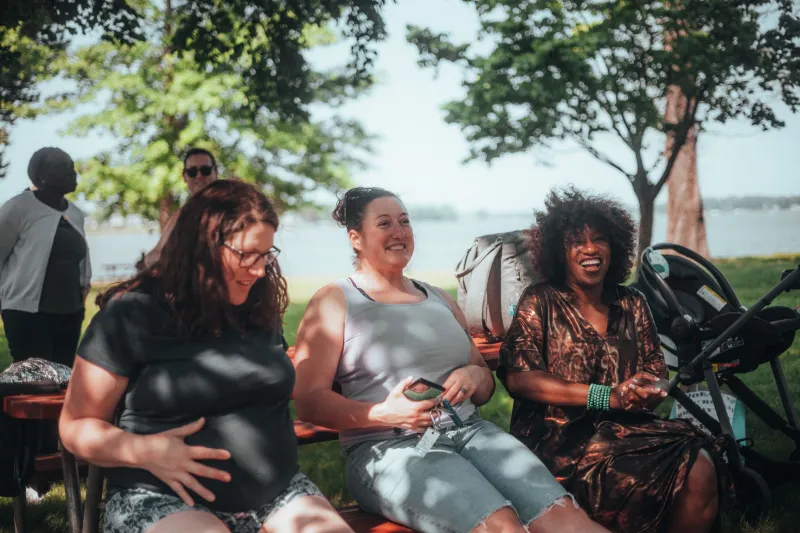
Photo by Photo by RETRATO DEPORTIVO on Unsplash on Unsplash
The brochure says 'all are welcome.' The Instagram grid is full of words like 'inclusive,' 'community,' and 'safe space.' The event description promises a judgment-free environment where every body is celebrated.
And then you show up and realize the chairs don't accommodate you. The workshop is priced at three hundred dollars a ticket. The presenter opens with a comment about 'clean eating' that lands like a thud. The vendor hall is a gauntlet of before-and-after transformation products. Nobody on the organizing team looks like you.
This is wellness gatekeeping. And it's more common than the industry wants to admit.
The Gap Between Language and Reality
Body-positive language has gone mainstream in the last several years, which is — in many ways — a good thing. It means the conversation has shifted. It means more people are at least aware that not everyone has been welcomed in wellness spaces historically.
But mainstream adoption also means dilution. 'Body positivity' has become a marketing term, deployed by brands and event organizers who want the warm associations of the phrase without doing the structural work that genuine inclusion requires. When the language outpaces the practice, the result is spaces that feel welcoming in their messaging and alienating in their reality.
That gap — between what a space says and what it actually does — is where a lot of harm lives.
What Gatekeeping Actually Looks Like
Exclusion in wellness spaces rarely announces itself directly. It tends to operate through systems, defaults, and oversights that collectively send a message: this space was not designed with you in mind.
Size and physical accessibility are among the most immediate and tangible forms of exclusion. Venues with fixed seating that doesn't accommodate larger bodies. Yoga studios with weight limits on props and equipment. Workshops where the chairs have arms that make them inaccessible for fat participants. These aren't edge cases — they're consistent, documented experiences that tell a significant portion of the population that their bodies are an afterthought.
Economic barriers function as a quieter but equally effective gatekeeper. A weekend wellness retreat that runs two thousand dollars before travel and accommodation isn't accessible to most Americans. Neither is a yoga teacher training program, a high-end fitness studio membership, or a conference with ticket prices that assume a certain income level. When wellness is positioned as a luxury product, the communities that need it most — who often face the greatest structural stressors on their health — are systematically excluded.
Ability and disability get largely ignored in mainstream wellness spaces. Events that don't offer ASL interpretation, that hold sessions in non-wheelchair-accessible venues, that don't provide sensory accommodations or offer materials in accessible formats — these spaces are announcing, loudly, who they actually built the event for.
Race and cultural context shape who feels safe and welcome in a room. A wellness event that centers whiteness — in its speaker lineup, its aesthetic, its cultural references, its implicit norms of behavior — is not a neutral space. It's a racialized one. People of color have long navigated wellness industries that were built around white bodies and white wellness traditions, often without acknowledgment of that history.
Coded language and implicit norms can exclude without ever using a single overtly discriminatory word. Presenters who casually reference 'getting back on track' with eating. Events that celebrate 'transformation' in ways that clearly mean weight loss. Communities where thin, conventionally attractive, able-bodied participants are centered in promotional materials. These signals accumulate, and the people they're directed at know exactly what they mean.
The Contradiction at the Heart of It
Here's what makes wellness gatekeeping particularly corrosive: it undermines the entire premise of what these spaces claim to be doing.
If body acceptance work is about dismantling the idea that certain bodies are more valuable, more worthy, more deserving of care than others — then a body-positive conference that only practically accommodates a narrow range of bodies is working against its own stated mission. It's replicating the exact hierarchies it claims to be challenging, just with different branding.
This isn't a peripheral issue. It's a fundamental one. You cannot build a genuine culture of self-acceptance on a foundation of selective welcome.
How to Evaluate a Space Before You Commit
If you're considering attending a wellness event or joining a community, here are some things worth looking at before you invest your time, money, and emotional energy:
Look at who's on stage. A speaker lineup that lacks diversity — in body size, race, ability, age, background — tells you something about whose experiences the event considers central. One or two 'diversity' speakers slotted into the program while the main content remains homogeneous is not inclusion.
Read the venue details carefully. Does the event list accessibility information proactively? Do they provide details about seating, mobility access, sensory considerations? A space that genuinely thinks about this will lead with it — they won't make you ask.
Look at the pricing structure. Are there sliding scale options, scholarship tickets, or community pricing? Is there a genuine attempt to make the event financially accessible, or is affordability an afterthought?
Notice the language used in promotional materials. Does it center weight loss, transformation, or 'clean' living in ways that suggest the space is still operating within diet culture frameworks? Does it use language that assumes a particular body type as the default?
Ask questions directly. Reach out to organizers before attending. Ask about their accessibility accommodations. Ask how they've worked to make the space inclusive. A space that takes this seriously will welcome the question. One that deflects or gets defensive is telling you something important.
What Genuine Inclusion Requires
Inclusion is not a vibe. It's not a hashtag or a values statement on a website. It's a series of concrete, ongoing decisions made by people who are accountable for the spaces they build.
It means hiring speakers and facilitators who reflect the full range of people the event claims to serve. It means vetting venues for physical accessibility before booking them. It means building pricing models that don't treat affordability as an afterthought. It means creating feedback channels and actually using what comes through them. It means centering the experiences of people who've historically been excluded — not as an add-on, but as a design principle.
It also means being honest when you fall short. No event, no community, no organization gets inclusion perfectly right every time. What distinguishes spaces that are genuinely trying from those that are performing inclusivity is what happens when the gaps are named. Do they respond with defensiveness and explanation? Or do they listen, acknowledge, and change?
Why This Matters Beyond the Event Itself
The stakes here are bigger than any single conference or workshop. The wellness industry in the United States is a multi-trillion-dollar ecosystem that shapes how millions of people understand their bodies, their health, and their worth. When that ecosystem is built on exclusion — when the benefits of community, self-care education, and body acceptance work are concentrated among the already-privileged — the harm ripples outward.
And when spaces do the harder work of genuine inclusion? The ripples go the other direction. Communities that authentically welcome all bodies don't just serve the people in the room. They model something different. They demonstrate, concretely, that another way is possible.
That's worth fighting for. And it starts with refusing to pretend that 'all are welcome' on a banner is the same as actually meaning it.