One Person Who Gets It: How a Single Body-Positive Relationship Can Change the Way You See Yourself Forever

Think about the last time someone looked at you — really looked at you — without a flicker of judgment. No quick scan up and down. No loaded pause before a compliment. Just... ease. Warmth. Acceptance.
For a lot of us, that kind of moment is rarer than it should be. And when it finally shows up, it can feel almost disorienting. Like, wait, is this allowed?
Here's the thing: that one person — that friend, mentor, or community member who genuinely doesn't flinch at your body, your size, your stretch marks, your whatever — might be doing more for your mental health than any solo wellness practice you've tried. Not because the inner work doesn't matter. It absolutely does. But because human beings are wired for connection in ways that run so deep, they shape the very stories we tell about ourselves.
Your Brain Is Watching Other People Watch You
Psychologists have a term for this: social mirroring. The basic idea is that we construct our self-image, at least in part, by internalizing how others seem to perceive us. It goes back to early childhood — we learn who we are by watching our caregivers' faces respond to us. That process doesn't stop at age five. It keeps running in the background, all the way through adulthood.
Research published in journals like Psychological Science and Self and Identity has shown that people's self-evaluations shift meaningfully based on the perceived attitudes of those they're close to. In other words, if the people you spend the most time with subtly (or not so subtly) treat thinness as a virtue and larger bodies as a problem, that framework seeps in — even when you're consciously trying to reject it.
The flip side? When someone in your life operates from a place of genuine body neutrality or body acceptance, that framework can seep in too. Slowly, steadily, in a way that no amount of solo journaling or positive affirmations can quite replicate on its own.
It's Not About Being Told You're Beautiful
Let's be clear about something: body-positive friendship isn't about having someone in your corner who showers you with compliments about your appearance. That's a common misconception, and it actually misses the point.
The real shift happens when someone treats your body as beside the point. When a friend suggests a hike and doesn't preface it with anything about "burning off" last night's dinner. When a coworker talks about food without assigning it moral value. When someone at a conference workshop laughs with you instead of at you, and your size is just... not a thing that enters the room.
That neutrality is radical. Because most of us have been marinating in a culture that constantly links body size to worthiness — in advertising, in family dinner table conversations, in the way doctors talk to us, in the comments section of basically everything. Having one person who just... doesn't do that? It starts to crack something open.
The Conference Room That Changed Everything
People who've attended body-positive events and conferences often describe a version of this experience in almost identical terms. There's usually a moment — sometimes in a workshop, sometimes just in the hallway during a coffee break — where they realize that everyone around them is operating by a completely different set of rules.
One woman, a teacher from Ohio who attended her first body-positive conference in her late thirties, described it this way: "I walked in braced for it to be kind of performative. Like, people saying the right things but still doing the thing with their eyes. But it wasn't like that. I had a twenty-minute conversation with a stranger about her job and her dog and a road trip she was planning, and my body never came up. It sounds so small, but I cried in my car afterward. I didn't know I'd been holding my breath for that long."
That's the power of being seen as a whole person first. It sounds simple. It is simple. And it is, for many people, completely transformative.
Why One Is Enough to Start
You don't need an entire squad of body-positive advocates to begin feeling the shift. Research on social influence suggests that even a single close relationship characterized by acceptance can act as a kind of buffer — softening the impact of the diet-culture noise that surrounds us and giving the brain a different reference point to return to.
Think of it like recalibration. If your internal compass has been set to "my body is a problem to be solved," one steady, consistent relationship that says otherwise starts pulling that needle in a new direction. It doesn't happen overnight. But it happens.
This is partly why community spaces — whether that's a body-positive yoga class, an online forum, or an in-person gathering like the ones we host here at Body Love Conference — can feel so disproportionately powerful. They're not just offering information or programming. They're offering people. People who are doing the work, who've arrived at some version of peace with their bodies (or are actively, honestly trying to), and whose presence becomes its own kind of medicine.
How to Find Your Person (or Be Someone Else's)
If you don't have that person in your life yet, here's some real talk: you might need to look somewhere new. Not because the people you love are bad people — but because body acceptance isn't the default setting in most American social circles. It has to be sought out, practiced, and modeled.
Some places to start:
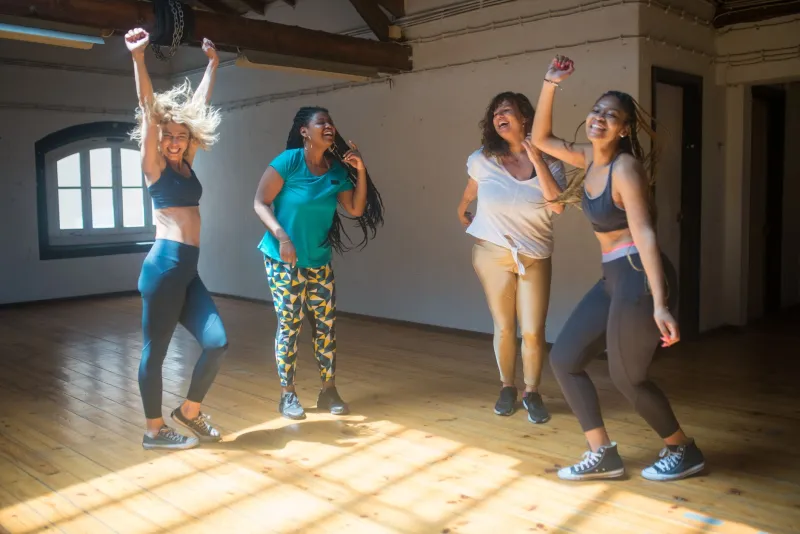
- Body-positive fitness spaces and studios, where movement is framed as joyful rather than punishing
- Conferences and workshops (hi, that's us) where the whole room is oriented around self-acceptance
- Online communities centered on Health at Every Size (HAES), fat liberation, or intuitive eating
- Therapy or coaching with practitioners who explicitly name body respect as part of their approach
- Book clubs or discussion groups built around body-positive literature
And if you're already somewhere on this journey? Consider that you might be that person for someone else. The friend who doesn't comment on what's on someone's plate. The colleague who doesn't bond over self-deprecating body talk. The family member who quietly, consistently refuses to play along with diet culture at the holiday table.
You don't have to give a speech. You just have to show up differently — and let people feel what it's like to be around someone who's made a different kind of peace.
The Ripple Is Real
Self-acceptance is often framed as a solo project — something you work on in your journal, in your mirror, in your therapy sessions. And yes, all of that matters. But humans aren't solo creatures. We're relational to our core, and our sense of self is always, always being shaped by the people we're in relationship with.
One body-positive person in your corner doesn't fix everything. But they can change the air in the room. They can make the impossible feel slightly more possible. They can give your nervous system a new kind of normal to grow toward.
And sometimes, that's exactly enough to start.