That Little Room Doesn't Get to Define You: Reclaiming the Fitting Room Experience

Let's be honest about what the fitting room actually is. It's a small, often fluorescent-lit box where you're supposed to strip down, try on clothes sized according to a system that was never designed with most bodies in mind, stare at yourself in a mirror angled at maximum unflattering, and somehow come out feeling good about the experience. The fact that so many of us have cried in one of those rooms — or left a store entirely without buying anything just to escape — isn't a personal failure. It's a design failure. A cultural failure.
And people are finally starting to call it out.
Why the Fitting Room Hits Different (And Not in a Good Way)
There's real psychology behind why those few square feet can feel so destabilizing. Research in body image and consumer psychology consistently shows that the fitting room experience is one of the most triggering moments in the shopping process — not just because of how we look, but because of how the environment is set up to make us feel. Harsh overhead lighting that flattens and shadows. Narrow mirrors. Cramped spaces that make movement feel awkward. Sizing labels that vary wildly from brand to brand, turning something as neutral as a number into what feels like a verdict.
When you layer on the broader cultural messaging — the idea that clothes should reward thinness, that "flattering" is code for "smaller-looking," that your body is the problem to be solved — the fitting room becomes a pressure cooker. You go in to try on a dress and you come out questioning your worth. That's not dramatic. That's the experience millions of American shoppers have on a regular basis.
For people in larger bodies, the toll is often even steeper. Many stores still don't carry extended sizes in-store at all, meaning shoppers are forced to order online, try things at home, and deal with the hassle of returns — a separate but related kind of exhaustion. And when extended sizes are available in-store, they're often relegated to a back corner or a separate section, which sends its own message.
Who's Actually Trying to Change This
The good news — and there genuinely is good news here — is that the fitting room as we've known it is being challenged from multiple directions at once.
Some retailers are redesigning the physical space itself. Brands like Aerie and Universal Standard have made meaningful moves toward inclusive sizing and, in some locations, have rethought fitting room environments to feel less clinical and more human. Aerie's long-standing commitment to unretouched imagery extends, in spirit, to how they approach the in-store experience. Universal Standard, which offers sizing from 00 to 40, has built its entire brand identity around the idea that clothing should adapt to people — not the other way around.
Independent boutiques across the US are also stepping up in ways big-box retailers often can't. Shops like Rebdolls in New York and Fat Fancy (now operating primarily online but with a fiercely loyal community) have built reputations specifically around making plus and extended-size shoppers feel like the intended customer, not an afterthought. That shift in framing — from accommodation to celebration — changes everything about how you feel walking into a fitting room.
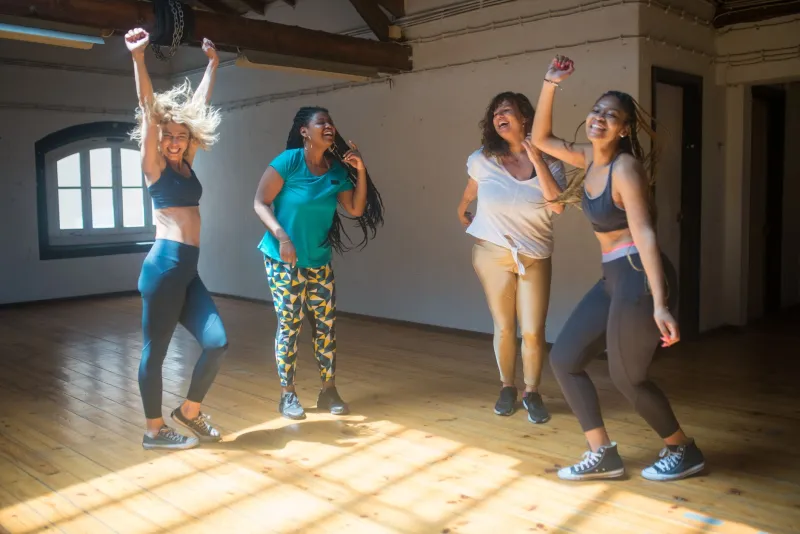
Community-led initiatives are doing equally important work. Body-positive shopping events, swap meets, and styling workshops are popping up in cities from Atlanta to Portland, creating spaces where trying on clothes happens in community rather than in isolation. When you're surrounded by people who are rooting for you, that mirror looks different.
What You Can Actually Do Right Now
Waiting for the entire retail industry to catch up isn't a strategy. In the meantime, here are some genuinely useful ways to shift the fitting room experience on your own terms.
Bring a hype person. Seriously. Shopping with a friend who understands body positivity — someone who will celebrate what fits and shrug off what doesn't — is one of the most effective tools available. The fitting room stops being a solo shame spiral and becomes a collaborative, even fun, experience.
Ignore the size on the label. This sounds simple and is genuinely hard. But that number is a manufacturing convention, not a reflection of your body's value. Different brands size completely differently. A tag is logistical information, not a judgment. Try repeating that until it starts to land.
Set an intention before you go in. This is something body-positive coaches and therapists recommend frequently — deciding ahead of time what you're there for. You're there to find clothes that feel good on your actual body today. Not to evaluate your body. Not to motivate yourself to change. To find things that work right now.
Give yourself an exit ramp. If a session is going sideways and you feel yourself spiraling, you're allowed to stop. Put your clothes back on, leave the store, get a coffee, and come back another day. The clothes will still be there. Your mental health is not worth sacrificing for a pair of jeans.
Seek out fitting rooms that are actually designed well. Some stores are investing in better lighting, larger spaces, and more thoughtful design. When you find one that works, remember it. Tell your friends. Leave a review. Retailers pay attention to feedback, and positive reinforcement for good design is just as useful as calling out bad design.
The Bigger Picture
The fitting room problem isn't really about fitting rooms. It's about a retail culture that has historically treated certain bodies as the default and everyone else as a problem to be managed. Changing that culture takes time, advocacy, and consistent pressure from shoppers who refuse to accept the status quo.
But individual experience matters too. The way you talk to yourself in that mirror, the stories you tell yourself about what you see — those things are in your hands right now. Body love isn't a destination you arrive at after enough positive shopping experiences. It's something you practice, imperfectly and repeatedly, in exactly the kinds of moments that feel the hardest.
That little room doesn't get to decide how you feel about yourself. You do. And the more we remind each other of that — in community, in conversation, at events where this stuff gets talked about out loud — the easier it becomes to walk back in there and mean it.