Size Is Just a Number — So Why Does It Feel Like a Verdict?
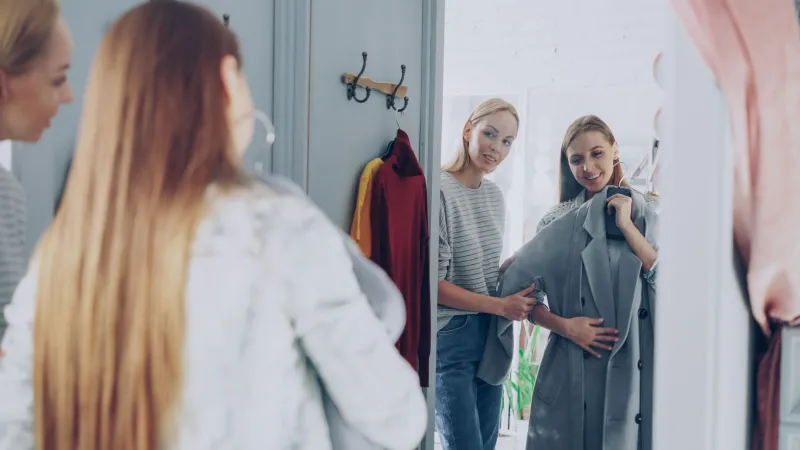
You've been there. You grab a few things off the rack in what you think is your size, step into that tiny fluorescent cube, and suddenly the whole afternoon feels like a referendum on your body. Nothing fits quite right. The zipper stops halfway. The shoulders are off. You leave empty-handed and somehow feel worse about yourself than when you walked in.
Here's what nobody tells you in that moment: it's not you. It's genuinely, historically, structurally not you.
The Origin Story Nobody Asked For
American clothing sizes have a wild and largely forgotten backstory. Back in the 1940s, the U.S. government commissioned a study to try to standardize women's clothing sizes. Researchers measured thousands of women — but the sample skewed heavily toward white, younger, and more slender bodies. The data was incomplete, the methodology was flawed, and yet the numbers that came out of that study became the foundation for how clothing was sized for decades.
By the time the industry moved away from that original standard in the 1980s and '90s, brands had already started doing something called "vanity sizing" — gradually inflating what a size meant so shoppers would feel good about fitting into a smaller number. The result? A size 8 today is not the same as a size 8 in 1985. And a size 8 at one store is completely different from a size 8 at the store next door.
In other words, the number on that tag is essentially made up. It is not a measurement of your body. It is not a fact. It is a retail convention that has been shifting and inconsistent for the better part of a century.
What the Fitting Room Is Actually Measuring
The psychological toll of this chaos is real and well-documented. Research consistently links negative fitting room experiences to body dissatisfaction, disordered eating patterns, and avoidance of social situations. When you walk into a store and nothing fits, your brain doesn't automatically think "this store has inconsistent sizing" — it thinks "something is wrong with me."
And that's by design, at least in part. For a long time, the fashion industry operated on the implicit message that clothing was aspirational — you were supposed to want to fit into it, to work toward it. Exclusion was built into the business model.
That model is crumbling. Slowly, unevenly, but genuinely.
The Brands Actually Doing the Work
A growing number of labels are rethinking sizing from the ground up, and their approaches vary in really interesting ways.
Universal Standard has built its entire brand identity around fit consistency and extended sizing, running from 00 to 40. They offer a "fit liberty" program that lets you swap items if your size changes within a year. The message is explicit: your body changes, and that's normal, and we've got you.
Girlfriend Collective offers activewear in sizes XXS through 6XL and uses inclusive marketing that actually shows those sizes in action — not as an afterthought, but as the centerpiece. Their commitment to sustainability adds another layer of intentionality to the brand.
Torrid has been a go-to for plus-size shoppers for years, but what's notable is their continued investment in trend-forward styles rather than treating extended sizes as a separate, lesser category.
ELOQUII (now part of Walmart's portfolio) started as a size-inclusive brand specifically for sizes 14 and up and has maintained a strong identity around fashion-forward design at accessible price points.
On the more radical end of the spectrum, some designers and smaller brands are experimenting with removing size labels entirely, instead using actual measurements — waist in inches, inseam length, chest circumference — the way menswear has operated for years. It's a small shift that carries a big message: you are a set of dimensions, not a category.
The Advocacy Pushing the Industry Further
Brands don't change in a vacuum. Behind the scenes, there's a whole ecosystem of advocates, stylists, and community organizations pushing for systemic reform.
The Association for Size Diversity and Health (ASDAH) has long championed a Health at Every Size framework that challenges the assumption that body size is the primary indicator of health or worth — including in how we dress and shop. Fashion influencers and body-positive creators with massive followings are using their platforms to call out brands publicly when their size ranges fall short, and to celebrate those getting it right.
Shopping guides specifically curated for fat, plus-size, and mid-size bodies have proliferated across social media and independent blogs, filling a gap that mainstream fashion media left wide open for years. These community-built resources are often more useful than anything you'd find in a traditional magazine.
What You Can Do Right Now
First: give yourself permission to stop treating the tag number as information about your body. It isn't. It's a code that means something slightly different everywhere you shop.
Second: shop by measurements when you can. Many online retailers now include detailed size charts with actual inches. Taking your own measurements takes about five minutes and can save you hours of fitting room frustration.
Third: seek out communities that share your body type and shopping experiences. Whether it's a subreddit, a Facebook group, or a creator you follow on TikTok, finding people who have already done the trial and error of figuring out which brands actually deliver on their size-inclusive promises is genuinely useful.
Fourth: when a brand gets it wrong, say so — and when they get it right, say that too. Consumer feedback still moves markets.
The Bigger Picture
At Body Love Conference, we talk a lot about what it means to feel at home in your body. But feeling at home in your body includes being able to clothe it without shame, without a scavenger hunt, without leaving a store feeling smaller than when you walked in.
The retail industry built a system that excluded most real bodies and then convinced those bodies that the exclusion was their fault. That story is starting to change — not because the industry suddenly developed a conscience, but because communities of people who were fed up demanded better and built alternatives when the mainstream wouldn't move fast enough.
You deserve to walk into a store, find something beautiful, and walk out feeling like yourself. That's not a luxury. That's just what shopping should be.