10 Affirmations That Actually Hold Up on a Messy, Ordinary Tuesday

Here's an honest confession: most affirmations are kind of annoying.
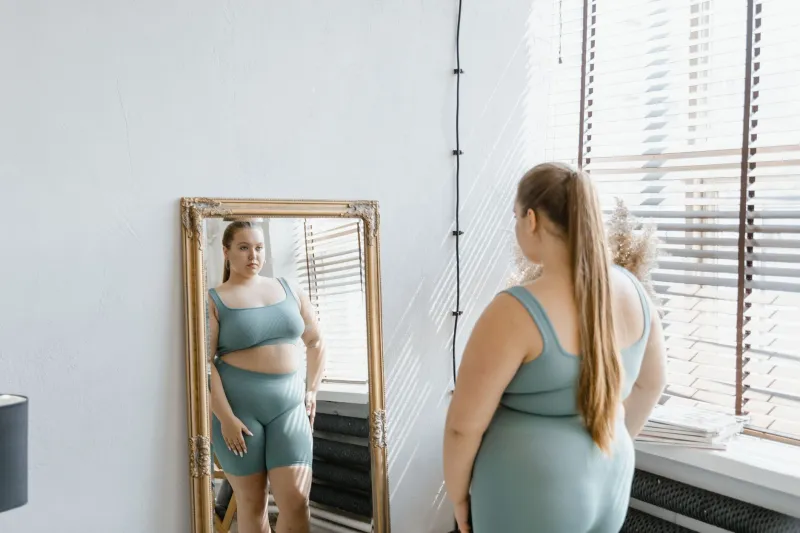
"I am beautiful exactly as I am!" Cool. Tell that to the version of me standing in fluorescent dressing room lighting at 7 PM on a Thursday, holding a pair of jeans that didn't fit the way I hoped and trying not to spiral.
The problem with a lot of self-love language is that it asks us to leap from deeply internalized shame — years, sometimes decades of diet culture messaging — straight to radical unconditional love. And when we can't stick that landing (which, spoiler: most of us can't, most of the time), we feel like we've failed at healing, which is somehow worse than just feeling bad in the first place.
What actually works? Affirmations that meet you where you are. Ones that don't demand you feel something you don't. Ones that are honest about the mess while still pointing you somewhere gentler.
These ten are for a Tuesday. A regular, unglamorous, no-retreat-vibes Tuesday.
1. "My body is doing something right now, and that's worth acknowledging."
We spend so much energy cataloguing what our bodies look like and almost none noticing what they're actually doing — breathing, digesting, healing a papercut, keeping your heart going without you having to think about it once.
This affirmation works because it sidesteps the appearance trap entirely. You don't have to feel beautiful. You just have to notice function.
Try this: Set a phone reminder for 2 PM that just says "What is my body doing right now?" Take ten seconds to actually answer it. That's it.
2. "I don't have to love my body today. I just have to be a little less mean to it."
Research from Dr. Kristin Neff's work on self-compassion consistently shows that we don't need to feel positive to reduce harm. Neutrality is a valid destination. Ceasing hostility is progress.
 Photo: Dr. Kristin Neff, via www.theliveschedule.com
If "I love my body" feels like a lie you can't get behind right now, that's okay. "I'll try to be a bit kinder to it today" is a real, achievable thing.
Try this: Notice one critical thought you have about your body today. Just notice it — don't fight it, don't shame yourself for having it. Then ask: Would I say this to someone I love? You don't have to answer out loud.
3. "Diet culture lied to me, and unlearning takes time."
This one is important because it externalizes the source of the wound. You didn't decide on your own to hate your body. You were taught to. By magazines, by relatives at holiday dinners, by gym culture, by a healthcare system that often equates thinness with virtue.
Naming that isn't making excuses. It's accurate.
Try this: Write down one "rule" you grew up believing about food or bodies. Then write next to it: Where did I learn this? Was it actually true?
4. "What I eat for lunch is not a moral event."
Say it with us. Eating a salad doesn't make you good. Eating a cheeseburger doesn't make you bad. Food is fuel and pleasure and culture and comfort, and none of those things are sins.
This one tends to require repetition. Diet culture is deeply embedded in American food language — we "cheat," we "indulge," we "earn" treats. Dismantling that takes consistent, gentle interruption.
Try this: Today, eat one thing you actually want without narrating it as good or bad — not even in your head. Just eat it. Notice how that feels.
5. "I am allowed to take up space."
Physical space. Conversational space. Space in photographs. Space at the table.
For people in larger bodies, for women, for anyone who's been conditioned to shrink — this one hits different. The impulse to make yourself smaller, quieter, less visible is often so automatic it doesn't even register as a choice anymore.
Try this: The next time you're in a public space — a waiting room, a subway car, a meeting — sit the way that's actually comfortable for your body. Not the way that takes up the least room. Notice the difference.
6. "Rest is not laziness. My body knows what it needs."
American hustle culture has made exhaustion a personality trait and productivity a measure of worth. Wellness culture, ironically, often makes this worse — turning self-care into another achievement to optimize.
But bodies genuinely need rest. Sleep, stillness, doing nothing — these are biological requirements, not indulgences to feel guilty about.
Try this: Schedule fifteen minutes of actual rest this week. Not scrolling. Not a podcast. Just lying down or sitting quietly. Put it in your calendar like a meeting. Honor it like one.
7. "My worth isn't a before-and-after story."
Before-and-after narratives are everywhere in wellness — the implicit message being that the "after" body is the one that deserves love, celebration, and confidence. But healing isn't linear, bodies change throughout life, and your value as a human being has never been contingent on what you weigh.
This affirmation is a direct pushback on one of diet culture's most seductive lies.
Try this: Find a photo of yourself from a time you remember feeling ashamed of your body. Look at it and write three things that person deserved — kindness, rest, fun, connection. Then consider: do you deserve those things any less right now?
8. "I can pursue health without punishing myself."
This one is for anyone who's been told that body positivity means not caring about your health. That's a false binary. You can want to feel good, have energy, and support your body without that pursuit being rooted in self-hatred or fear.
The difference is the energy behind the action. Movement that comes from punishment feels different — in your body and your mind — than movement that comes from care.
Try this: Think about one health-related habit you have. Ask yourself honestly: Am I doing this from a place of care or a place of fear? No judgment. Just curiosity.
9. "Other people's bodies are not my business, and mine is not theirs."
This one works in two directions. It's a boundary you set with others — a reminder that unsolicited comments about your body (from family, coworkers, even well-meaning friends) aren't something you have to accept or engage with.
But it's also a practice for yourself. When you notice yourself comparing, critiquing, or ranking bodies — yours or anyone else's — this affirmation is the gentle redirect.
Try this: The next time you catch yourself in a comparison spiral, say this out loud (or in your head): Her body is not my business. My body is not a competition. Then redirect your attention somewhere else. It gets easier with practice.
10. "I am more than a body, and I am also exactly a body — and both of those things are fine."
This is the one that ties it all together. You are not reducible to your physical form. Your thoughts, your relationships, your creativity, your humor — these things are real and irreducible.
And — you live in a body. It's the vessel for all of it. Honoring that vessel, learning to live in it with less friction and more grace, is meaningful work. Not because it makes you more worthy, but because you deserve to feel at home in your own skin.
Try this: Tonight before bed, place one hand on your chest and take three slow breaths. That's it. That's the whole practice. Just being present with yourself for thirty seconds.
A Note Before You Go
None of these affirmations are magic. They won't undo years of conditioning in a single Tuesday. But they're honest, and they're real, and they're the kind of thing you can actually say to yourself in a Target parking lot without feeling like a fraud.
Body love isn't a destination you arrive at. It's a direction you keep choosing — imperfectly, repeatedly, on regular days that don't feel particularly transformative.
Want to go deeper? Join us at an upcoming Body Love Conference event, where you'll find a whole community of people doing this exact work — together. Find your next gathering at bodyloveconference.com.
You're doing better than you think.