Sweat on Your Own Terms: How a New Wave of Fitness Spaces Is Making Movement Feel Like a Party, Not a Punishment
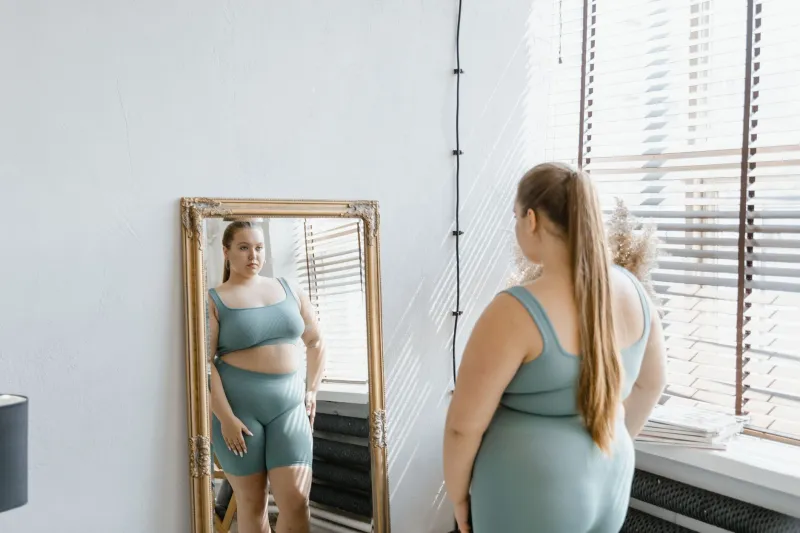
Walk into most traditional group fitness classes in America and you'll clock the same setup pretty fast: mirrored walls floor to ceiling, an instructor calling out calorie counts between tracks, motivational posters that basically amount to "suffer now, look better later." For a lot of people — especially those who've spent years at war with their own reflection — that environment doesn't inspire anything except dread.
But something is shifting. Quietly at first, then louder, a wave of fitness spaces and body-positive event organizers are scrapping the old playbook entirely. No mirrors. No weight-loss talk. No performance rankings. Just bodies moving because movement, it turns out, can actually feel really, really good.
The Old Model Was Built on Shame — and It Wasn't Working
Let's be honest about what traditional fitness culture has been selling. For decades, the message embedded in group exercise classes was pretty straightforward: your body is a problem, and working out is how you fix it. Every sprint interval, every burpee, every "push through the burn" was framed as penance for existing in a body that wasn't yet acceptable.
The data on how well that approach works long-term is, to put it charitably, not great. Research published in the journal Health Psychology has found that exercise motivated by appearance goals and external pressure tends to fizzle out faster than movement driven by internal satisfaction. When the gym feels like punishment, people stop going — and then they feel bad about stopping, which adds another layer of shame onto the whole pile.
"The shame-based model creates a cycle that's really hard to escape," says Dr. Renata Flores, a licensed psychologist in Austin, Texas who specializes in body image and movement. "When your brain associates exercise with punishment or inadequacy, you're building a negative emotional feedback loop. The body learns to dread it. That's the opposite of sustainable."
What Joy-Based Movement Actually Looks Like
So what does the alternative look like in practice? Ask Keisha Monroe, who teaches what she calls "free movement" classes out of a studio in Atlanta that removed its mirrors two years ago and never looked back.
"The first time I taught without mirrors, half the class didn't know what to do with themselves," Keisha laughs. "People are so trained to watch themselves, to critique themselves in real time. When you take that away, something opens up. They start actually feeling the movement instead of judging it."
Keisha's classes — which draw everyone from college students to women in their sixties — don't track calories, don't offer modifications framed as "easier" options, and never, ever mention weight. Instead, she cues participants to notice sensation. How does it feel when your arms move through space? What does your spine want to do right now?
"I say things like, 'What does celebration look like in your body?' And at first people think I'm being weird. But by the end of class, they're grinning. That's the whole point."
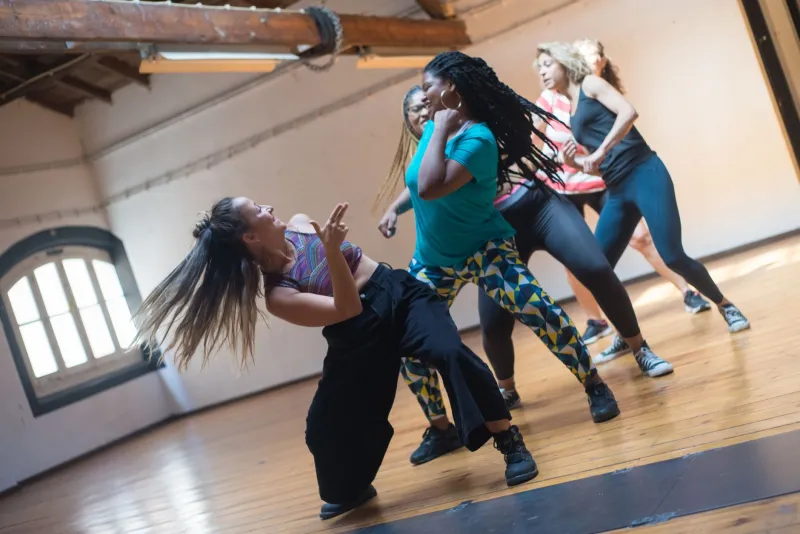
This philosophy is showing up at body-positive conferences and wellness gatherings too. Movement sessions at inclusive wellness events increasingly look less like boot camp and more like a really good dance party — intentionally unstructured, explicitly welcoming of all body types and ability levels, and completely divorced from any conversation about burning off lunch.
The Psychology of Moving for Pleasure
There's real science behind why this reframe matters. When people engage in what researchers call "intrinsically motivated" exercise — meaning they're moving because it genuinely feels good, not because they're trying to hit a number — they're more likely to stick with it over time, experience better mood outcomes, and develop a more positive relationship with their bodies overall.
Dr. Marcus Webb, a sports psychologist based in Chicago who consults with fitness studios on inclusive programming, explains it this way: "The brain doesn't distinguish between physical and emotional safety. If you feel judged or inadequate in a fitness space, your nervous system is going to be in a low-grade stress response the entire time. That's not a great state for learning, for enjoyment, or for building any kind of positive association with movement."
Conversely, when movement is framed as exploration or celebration, the brain's reward pathways light up differently. "You get dopamine hits tied to the experience itself, not to some external outcome you may or may not achieve," Dr. Webb adds. "That's what builds a lifelong mover — not someone who hates every second of it but does it anyway."
Real People, Real Shifts
Tamara Osei, a 34-year-old teacher from Minneapolis, spent most of her twenties cycling through gym memberships she never used. "I'd sign up, go twice, feel terrible about how I looked compared to everyone else, and quit," she says. "I thought I just wasn't a fitness person."
Then a friend dragged her to a body-positive movement workshop at a wellness conference last spring. The facilitator opened by explicitly saying that no one was there to lose weight, get toned, or improve their bodies in any measurable way. They were there to feel alive.
"I cried," Tamara says simply. "I didn't expect to cry at a fitness class. But I'd never been in a movement space that wasn't trying to fix me. It completely changed what I thought exercise could be."
She now takes classes twice a week — not because she's tracking anything, but because she genuinely enjoys it.
How to Find (or Build) This in Your Community
If your current gym situation feels more like a guilt trip than a good time, you don't have to wait for the industry to catch up. Here's how to start finding or advocating for joy-based movement right where you are:
Ask direct questions before you commit. Before signing up for any class or studio membership, ask the instructor how they talk about weight and bodies. Do they offer modifications without framing them as "easier"? Do they use appearance-based motivation? Their answers will tell you a lot.
Look for Health at Every Size (HAES)-aligned studios. The HAES framework explicitly decouples movement from weight management, and many studios and instructors now identify with this approach. A quick search for "HAES fitness" or "body-positive movement" plus your city is a solid starting point.
Seek out community gatherings. Body-positive conferences and wellness events often include movement sessions specifically designed with inclusion in mind. These can be a great low-pressure way to experience joy-based exercise before committing to a regular class.
Advocate in spaces you already occupy. If you love your yoga studio but the instructor keeps making comments about "burning off the weekend," say something. More instructors than you'd expect are open to feedback — they may not realize how their language lands.
Start in your living room. Put on a playlist that makes you feel something and just move. No format, no goal, no one watching. That counts. That absolutely counts.
The Reckoning Is Here
The fitness industry built a very profitable empire on making people feel bad about their bodies. But the cracks in that model are getting harder to ignore, and the people building something better — studios without mirrors, instructors who cue sensation over appearance, conference movement sessions that feel more like community than competition — are proving that there's real demand for a different way.
Your body doesn't owe anyone a transformation. But it does deserve to feel good, to feel free, to move through the world with something closer to joy than dread. That's not a radical idea. It's just a long-overdue one.