Your Closet Called — It's Time to Dress the Body You're Actually Living In
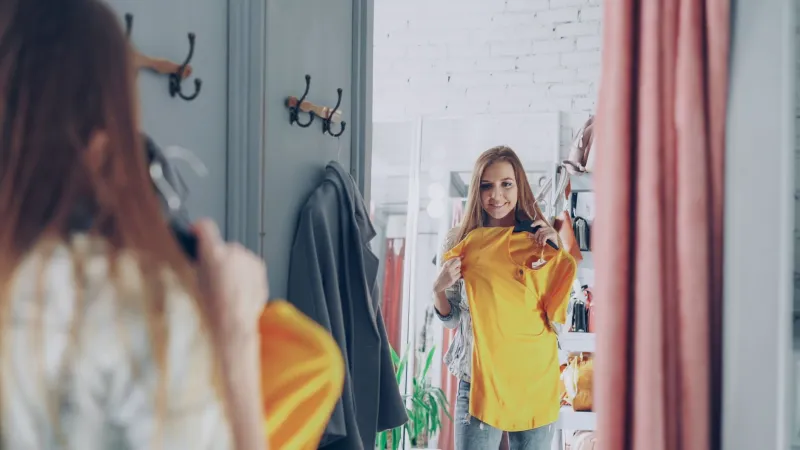
Let's talk about the jeans.
You know the ones. Folded neatly — or maybe just shoved — toward the back of the closet, still tagged or faded from a different chapter of your life. You don't wear them. They don't fit. But you keep them anyway, because getting rid of them would feel like giving up on something. A goal. A version of yourself you've been quietly promising to return to.
Sounds familiar? You're not alone. For millions of Americans, the closet has become less of a wardrobe and more of a before-and-after timeline — a physical archive of bodies past and bodies hoped for. And it's doing a number on how we feel about ourselves every single morning.
The Quiet Toll of 'Aspirational Sizing'
There's an industry term for it: aspirational sizing. It's the practice of buying clothes in a size smaller than what you currently wear, banking on the idea that you'll "get there" eventually. Retailers have quietly leaned into this for decades — and the psychological weight it places on everyday people is real.
Think about it. When you open your closet and the majority of what hangs there doesn't actually fit your body today, you start every morning with a low-grade reminder that your current self isn't quite enough. That's not a neutral experience. That's a daily micro-message that you are a body in progress, a rough draft waiting to be revised.
Research in the field of embodiment and self-perception consistently points to a link between clothing fit and body image. When clothes fit well, people report feeling more confident, more present, and more comfortable in their own skin. When they don't fit — too tight, too loose, pulled in ways that feel corrective rather than celebratory — the emotional ripple effect is real and cumulative.
What Shifts When You Dress for Right Now
Marissa, a 38-year-old teacher from Portland, Oregon, describes the moment she finally donated her "goal clothes" as equal parts terrifying and liberating. "I'd been holding onto a whole section of my closet for like four years," she says. "Every morning I'd see those clothes and feel like I was failing. The day I got rid of them and bought myself three pairs of pants that actually fit, I cried in the dressing room — but in a good way. I looked in the mirror and thought, oh, there I am."
 Photo: Portland, Oregon, via 4.bp.blogspot.com
That phrase — there I am — comes up again and again in conversations about present-tense dressing. There's something about wearing clothes that fit your actual body that makes you visible to yourself in a way that aspirational dressing never can.
Derrick, a 44-year-old from Atlanta, had a similar turning point after a friend pointed out that he'd been wearing the same oversized shirts for years — not because he liked them, but because he felt like he didn't "deserve" better-fitting clothes at his current size. "I thought fitted meant I was showing off something I should be hiding," he says. "But when I finally tried on stuff that actually fit me, I felt sharp. I felt like myself. It was wild how fast that happened."
The 'I'll Wear That When' Trap
We live in a culture that's obsessed with the future body. Ads, wellness content, social media — so much of it is structured around the idea that your best self is a thinner self, a smaller self, a self that hasn't quite arrived yet. Dressing for your future body is just one symptom of that larger narrative.
But here's the thing: your body isn't a placeholder. It's doing everything for you right now — carrying you through your days, holding your experiences, showing up for your life. It deserves clothes that acknowledge that. Clothes that fit aren't a reward for reaching some finish line. They're just... respect.
And practically speaking? Clothes that fit well almost always look better than clothes that don't, regardless of size. A well-fitted outfit at any size reads as put-together, intentional, and confident. Clothes that pull, gap, or sag — no matter how beloved or expensive they are — communicate discomfort, and that discomfort shows.
How to Start: Practical Moves Toward Present-Tense Dressing
If you're ready to start dressing for the body you actually have, here are some genuinely useful places to begin.
Do a compassionate closet audit. Pull out anything that doesn't fit your current body and set it aside. You don't have to donate everything right away if that feels too big — but creating a physical separation between "clothes that fit me now" and "everything else" is clarifying. Notice how you feel standing in front of what remains.
Find one thing that fits perfectly and wear it on purpose. Sometimes all it takes is one outfit — one pair of pants, one dress, one shirt — that fits you now to reset your relationship with getting dressed. Invest in that piece first. Let it show you what's possible.
Look for fit over trend. When shopping, prioritize how something fits your actual body over what size the tag says or whether it's "in" right now. Tailors exist for a reason, and a good hem or a nipped-in waist can transform a piece entirely. Many department stores offer basic alterations, and independent tailors are often more affordable than people expect.
Explore brands that design for your body. The good news is that the fashion industry — slowly, imperfectly, but genuinely — is expanding its size range and its design sensibility. Brands like Torrid, Universal Standard, and Girlfriend Collective have built real followings by making stylish, well-fitted clothing across a wide range of sizes. You deserve options, and more of them exist than ever before.
Notice the language you use when you shop. If you catch yourself saying things like "I'll buy that when I lose weight" or "I shouldn't wear that yet," pause. Ask yourself: what would it mean to buy it now? What would it feel like to walk out of that store with something beautiful that fits you today?
Getting Dressed as an Act of Self-Acceptance
At Body Love Conference, we talk a lot about the big, visible moments of self-acceptance — the affirmations, the mirror work, the community gatherings that remind us we're worthy of love exactly as we are. But self-acceptance also lives in the small, daily, unglamorous stuff. Like getting dressed in the morning.
 Photo: Body Love Conference, via cdn.britannica.com
Every time you choose a piece of clothing that honors the body you're actually in, you're making a quiet declaration: I am here. I am enough. I am worth dressing well right now.
That's not a small thing. That's a radical, ongoing, every-morning practice. And it starts with clearing out the back of the closet.
The jeans can go. You've got living to do.